Where Asian Handicap Came From
Asian Handicap betting started in Indonesia in the 1990s. Indonesian bookmakers were offering a football betting format that removed the draw as a possible result, giving bettors a straight choice between two outcomes instead of three.
The term "Asian Handicap" was coined in 1998 by journalist Joe Saumarez Smith in a UK betting publication. The name stuck.
European sportsbooks picked it up in the early 2000s. From there it spread across every major market. Today most Asian bookies cover it on leagues from the EPL to the V.League to the Indian Super League.
The reason it took hold: the draw is the hardest result to predict in football. Asian Handicap takes it off the table entirely.
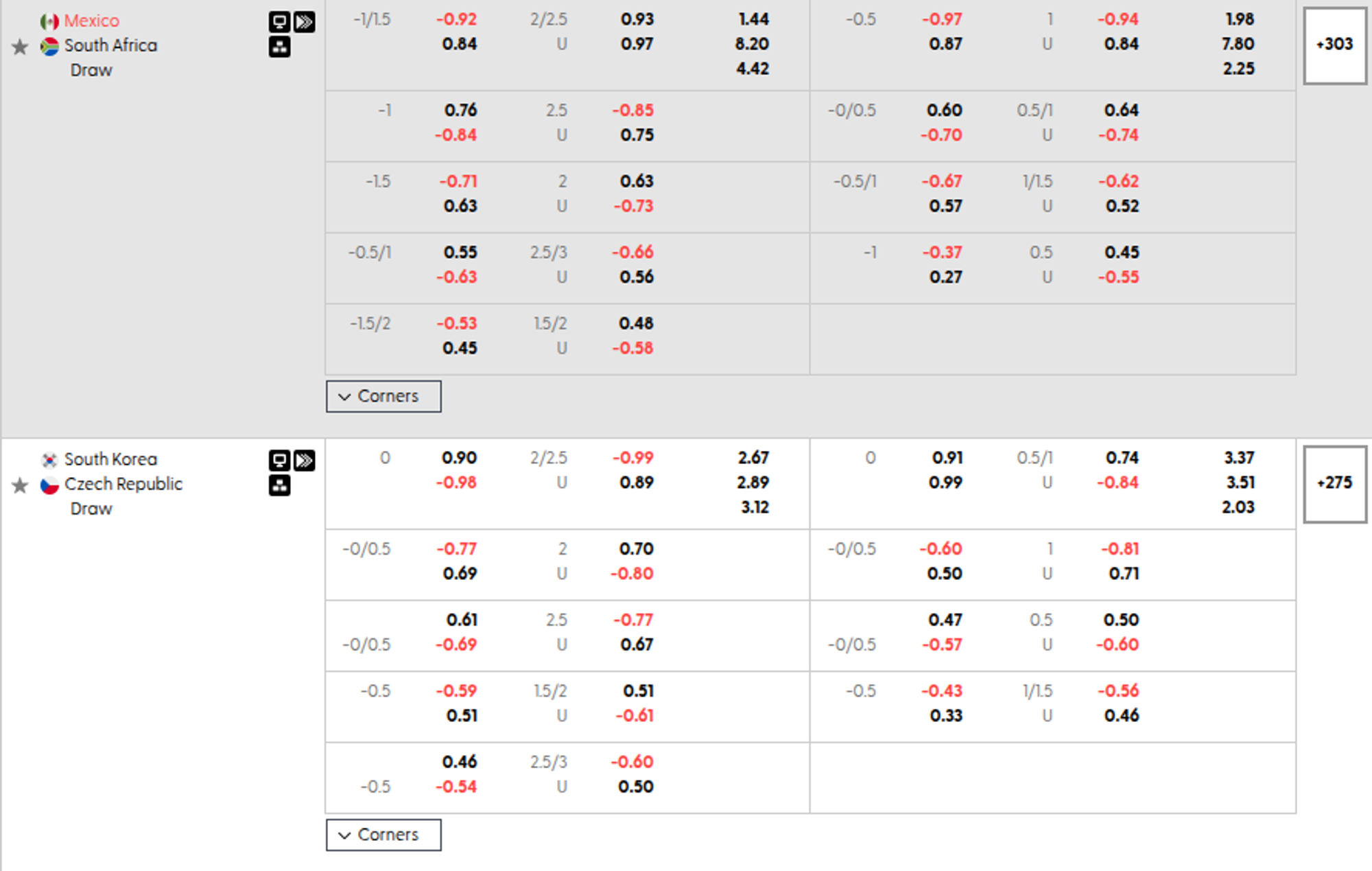
How to Read an Asian Handicap Line
A standard Asian Handicap line looks like this:
Manchester City -1.5 | Burnley +1.5
The minus sign means City are the favourite. They start the bet with a 1.5 goal deficit to overcome. The plus sign means Burnley receive a 1.5 goal head start.
To win a bet on City at -1.5, they need to win by 2 goals or more. A 1-0 win is not enough. The handicap turns that result into a 1-1.5 loss on paper.
To win a bet on Burnley at +1.5, they need to win, draw, or lose by exactly 1 goal. The head start covers a narrow defeat.
The odds
Because the handicap levels the contest, both sides are priced close to even. Typical odds run around 1.90 on each side. The sportsbook takes a small margin built into the pricing. That is how Asian bookies make their cut on every football betting market.
The handicap applies to the final 90-minute result. Extra time does not count unless the sportsbook states otherwise. Always check the match rules before placing.
Half Ball Lines: No Draw, No Refund
Half ball lines always end in a win or a loss. There is no refund, no push, no split. The half goal makes a draw mathematically impossible.
You can spot a half ball line by the .5 in the number: -0.5, +0.5, -1.5, +1.5, -2.5, and so on.
The -0.5 and +0.5 line
This is the most common entry-level line. At -0.5, the favourite must win the match by any margin. A 1-0 win is enough. A draw loses the bet.
At +0.5, the underdog wins the bet if they win or draw. They only lose if they lose the match outright.
Bigger half ball lines
The same logic carries to -1.5, -2.5 and any larger line. At -1.5, the favourite must win by 2 or more goals. A 1-0 win loses the bet. At -2.5, they need to win by 3 or more.
These lines appear when there is a big gap between the two teams. Asian bookies use them to keep both sides of the market roughly balanced in terms of probability.
Full Ball Lines and the Push
Full ball lines carry a whole number: -1, +1, -2, +2. No decimal, no half.
The key difference from half ball lines is the push. When the match result exactly matches the handicap, neither side wins. Your stake comes back.
How a push works
Take Team A -1 | Team B +1.
- Team A wins 2-0: the -1 bet wins, the +1 bet loses
- Team A wins 1-0: the handicap cancels the goal. Result is 0-0 on paper. Push. Stake refunded.
- Team A draws or loses: the -1 bet loses, the +1 bet wins
The push only happens at the exact margin. One goal either side and you have a clean result.
When a push helps and when it hurts
If you backed the favourite at -1 and they won by exactly one goal, the push saves your stake. You do not lose but you do not win either.
If you backed the underdog at +1 expecting a narrow defeat, the push also returns your money. It can feel like a missed win if the underdog held firm all match.
Most experienced bettors treat the push as a safety net built into full ball lines. It is one reason some players prefer full ball over half ball when backing a strong favourite against a clearly weaker side.
Quarter Ball Lines: The Split Bet
Quarter ball lines are where Asian Handicap gets its reputation for complexity. Lines like -0.25 and -0.75 split your stake across two separate bets. The result of each half determines what you win or lose.
The -0.25 Line
A -0.25 line splits your stake between 0 and -0.5.
- Favourite wins: both halves win. Full payout.
- Match draws: the 0 half pushes (stake returned), the -0.5 half loses. You lose half your stake.
- Favourite loses: both halves lose. Full loss.
Think of -0.25 as a softer version of -0.5. A draw does not wipe you out. It costs you half.
The -0.75 Line
A -0.75 line splits your stake between -0.5 and -1.
- Favourite wins by 2 or more: both halves win. Full payout.
- Favourite wins by exactly 1: the -0.5 half wins, the -1 half pushes. You collect on half your stake.
- Match draws or favourite loses: both halves lose. Full loss.
The -0.75 sits between the clean win of -0.5 and the push risk of -1. A one-goal win gives you a half-win instead of a full win or a refund.
Quarter lines exist because Asian bookies use them to fine-tune the market when the gap between two teams sits between two standard lines. They keep both sides of the bet balanced without moving to a full number.






Asian Handicap vs 1X2
1X2 is the standard football bet: pick home win, draw, or away win. Three outcomes, one correct answer.
Asian Handicap cuts it to two outcomes. That one difference has a real effect on the odds you get.
When Asian Handicap gives better value
When a strong team plays a weak one, the 1X2 price on the favourite gets very short. Backing Manchester City to beat a bottom-half side at 1X2 might return 1.20. Back them at -1.5 on Asian Handicap and the odds jump closer to 1.85 because you are taking on more risk in exchange for a more balanced price.
Asian Handicap also works better when you think a team will win but you are not sure they will avoid a draw. The handicap removes the draw result entirely, so you are only deciding on the direction of the match.
When 1X2 is the simpler choice
For closely matched games where a draw is genuinely likely, 1X2 lets you back the draw directly. Asian Handicap has no clean draw option, which means you need to use a 0 or quarter ball line to get partial draw protection.
1X2 is also easier for punters who want a simple bet without thinking about handicap margins. If you are new to football betting, starting with 1X2 and moving to Asian Handicap once you are comfortable with how margins work is a reasonable path.
Most Asian sportsbooks offer both formats on every match. The choice comes down to what you are trying to do with the bet.
Mistakes New Players Make
Treating a push like a loss
A refunded stake is not a loss. New players on full ball lines sometimes see the money return to their account and assume something went wrong. The push is a built-in feature of whole number lines. When the result lands exactly on the handicap, you get your stake back and move on.
Not checking which team carries the handicap
The minus always sits with the favourite. If the line shows Team A -1 | Team B +1, the handicap applies to Team A's score, not Team B's. New players sometimes read it backwards and calculate the wrong outcome. Before placing, confirm which side is giving goals and which side is receiving them.
Misreading quarter ball results
A half-win on a -0.75 line is not the same as a full win. If your team wins by one goal on a -0.75, you collect on half your stake at the stated odds. The other half settles as a push. The payout is roughly half what you expected from a full win. This catches players off guard the first few times they bet quarter lines. Check your potential returns before placing, not after.
Where to Bet Asian Handicap in Asia
Not every sportsbook handles Asian Handicap the same way. A few things to check before you open an account.
League coverage: The best Asian bookies offer AH across local leagues, not just the EPL or Champions League. If you want V.League or Liga 1 on Asian Handicap, check that the sportsbook lists those markets before depositing.
Live AH markets: Most major platforms offer Asian Handicap in-play, with the line adjusting as the match progresses. If live betting matters to you, confirm the sportsbook updates AH lines during the game and not just pre-match.
Odds format: Asian Handicap odds are displayed in decimal, Malay, or Hong Kong format depending on the platform. A good sportsbook lets you switch formats in your account settings. If you are used to one format, confirm you can set it before placing bets. For more on how these formats work, see our sports betting tips.
Push settlement speed: On full ball and quarter ball lines, pushes should settle automatically at full time. Check that the sportsbook credits refunds promptly. Delays on push settlements are a common complaint across smaller platforms.


You Might Also Like
Frequently Asked Questions
What does Asian Handicap mean?▾
What is a push in Asian Handicap betting?▾
What is the difference between -0.5 and -0.25 Asian Handicap?▾
Is Asian Handicap better than 1X2?▾
Does extra time count in Asian Handicap?▾
What does -0.75 Asian Handicap mean?▾
Which sportsbooks offer Asian Handicap in Asia?▾